Customer deployment
We are building Wildchild AI OS as an application installed in the customer's environment. The supported infrastructure, operating requirements and division of responsibilities must be confirmed for the engagement.
Customer deployment is one part of the design. Model calls, external services and invited support access each need their own assessment and authorization.
The questions to settle together
What information is needed?
Identify the sources, fields, owners and refresh requirements for the chosen workflow. Give people and agents the access needed for their defined responsibilities.
Where can information be processed?
Agree model providers, processing locations, retention and permitted data categories. Using customer infrastructure does not establish that every model operation remains there.
Which actions are permitted?
Separate suggestions, approvals and execution authority. A workflow or application request cannot authorize its own access or consequential action.
Who can support the system?
The intended model separates bounded routine maintenance from explicitly invited collaboration with business content. Agree access scope, duration, records and revocation for each mode.
How are changes released?
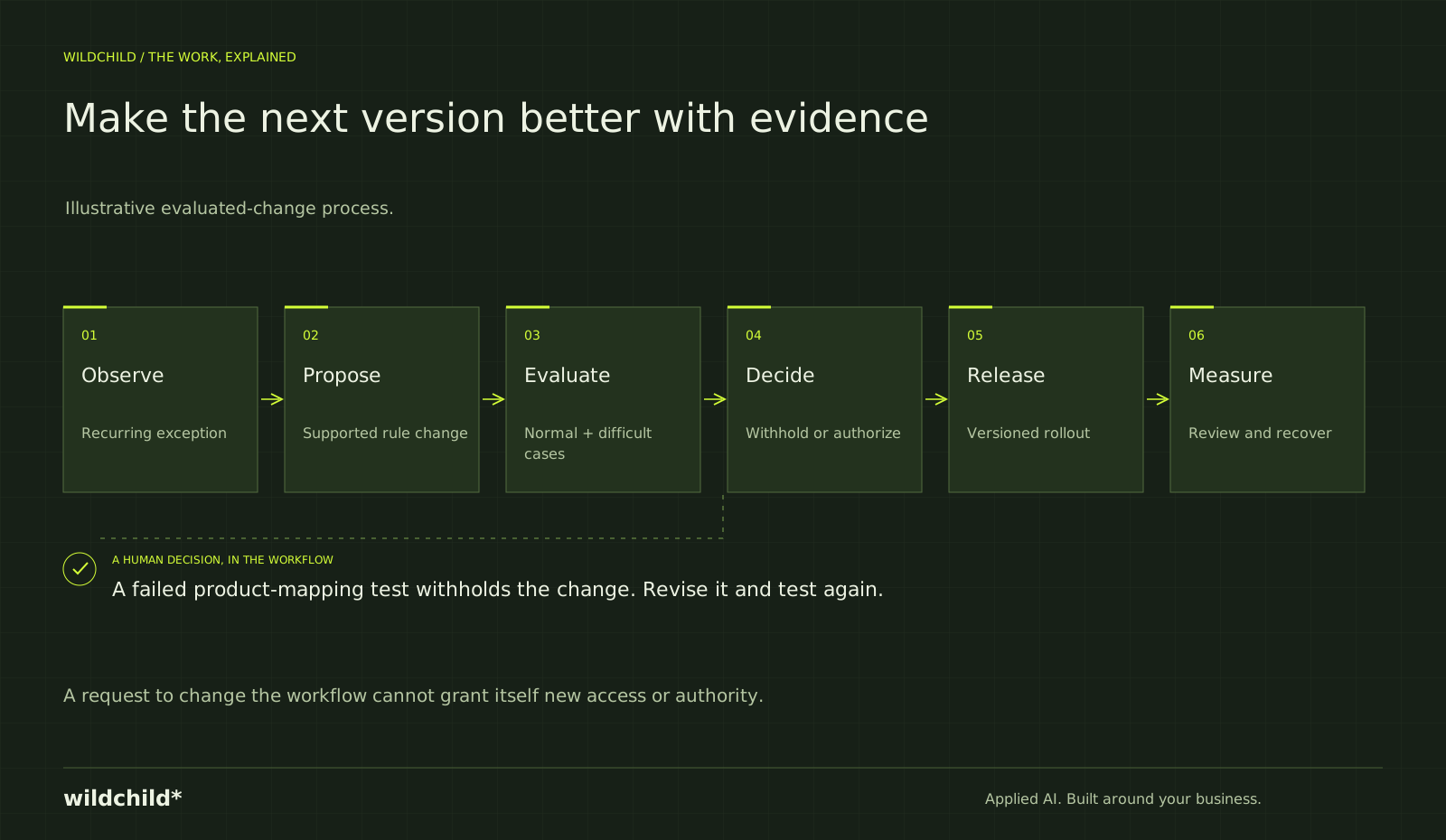
Define representative evaluations, responsible approvers, release conditions and recovery procedures. Supported low-risk changes can follow customer-defined gates; other changes need explicit authorization.
What happens when something fails?
Name the incident owner and define pause, investigation, escalation and recovery. Include uncertain action results and interrupted dependencies in testing.
Evidence for a deployment decision
The scope should identify the architecture, source and model choices, permission model, evaluation results, release record and operating responsibilities relevant to your workflow. Verify the supported arrangements before making a production commitment.
Questions
Is customer operation the same as source-code ownership?
No. Operating rights, configuration, export arrangements, extensions and intellectual property are defined in the commercial terms.
Can we use local models?
Model choice depends on supported capabilities, quality, infrastructure and workload requirements. Confirm a tested configuration for the proposed deployment.
What certifications does Wildchild hold?
We are not claiming achieved SOC 2 Type II or ISO/IEC 27001 certification. Any assurance materials available for an engagement should be identified during review.
What is available today?
This page describes our intended operating model. The engagement review must confirm which capabilities and evidence are available for the proposed scope.